





Table of Contents
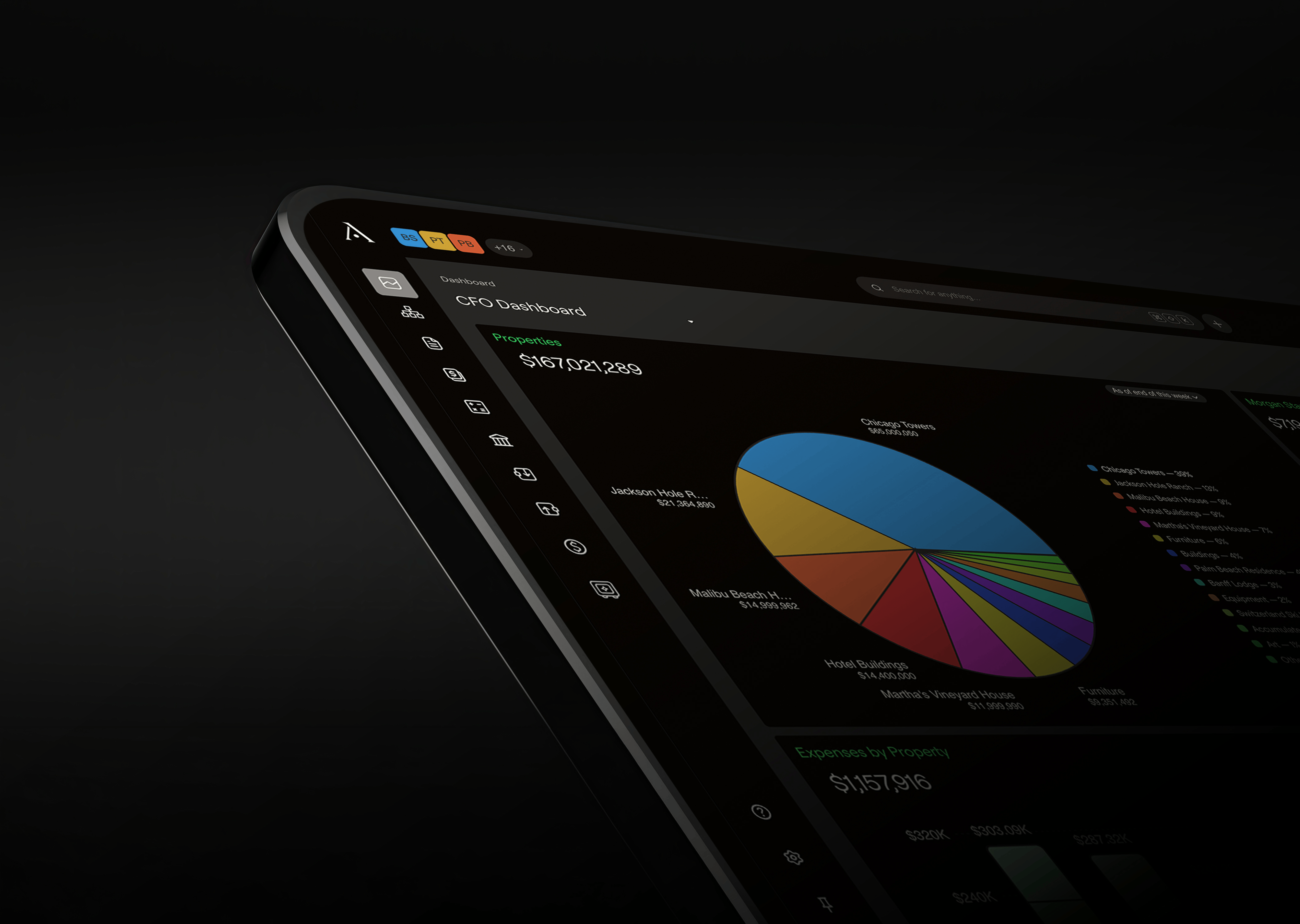
Unified accounting, investment tracking, entity management, and reporting—purpose-built for family offices.
If you're running a family office, you already know: QuickBooks wasn't built for you. Neither was NetSuite, Xero, or most "enterprise" accounting platforms. The moment you're managing 10+ entities across trusts, LLCs, LPs, and foundations all with intercompany transactions, multi-currency positions, and alternative assets, generic accounting software starts breaking.
2026 has brought a wave of purpose-built platforms designed specifically for this problem. We evaluated the leading family office accounting solutions based on what actually matters to controllers and CFOs: multi-entity consolidation, investment integration, automation, implementation speed, and total cost of ownership.
Here are the 9 best family office accounting platforms for 2026.
What to Look for in Family Office Accounting and Investments Software
Before diving into individual platforms, here's what separates family-office-grade software from generic accounting tools:
- Multi-entity consolidation: One-click roll-ups across dozens of entities with automatic intercompany eliminations, not month-long spreadsheet exercises
- Investment integration: Public equities, private equity, real estate, hedge funds, and direct investments tracked alongside the GL, not in a separate system
- Multi-currency support: Automatic FX gain/loss calculations, not manual journal entries every month
- Flexible chart of accounts: Family offices don't follow rigid GAAP structures; your software shouldn't force you into one
- Approval workflows: Configurable JE approval chains, not a free-for-all
- Audit trail: Immutable records for posted entries, not editable history
- Implementation timeline: Weeks, not quarters
1. Asseta AI
Best for: Single and multi-family offices that want accounting, banking, reporting and investments unified in one platform
Overview
Asseta is a purpose-built family office general ledger and investment platform designed around the unique complexity of multi-entity, multi-asset family offices. Unlike tools that started as generic accounting software and bolted on family office features, Asseta was architected from day one for entity hierarchies, intercompany accounting, and consolidated reporting.
The platform unifies accounting, banking, bill pay, investments, and document management in a single system, eliminating the 3-5 tool stack most family offices cobble together.
Key Strengths
- Best-in-class General Ledger: Asseta's core platform is built around a proprietary, multi-entity, multi-dimensional, multi-asset general ledger purpose built for family offices.
- Unified platform: GL, banking, investments, bill pay, AP, document vault, and FP&A in one system. No integrating five different tools to get a complete financial picture.
- Multi-entity architecture: Supports complex ownership structures (trusts, LLCs, LPs, foundations) with real-time consolidated reporting and roll-ups. Intercompany transactions are automatically split across ownership structures.
- Speed: Clients report 8.5x faster account reconciliation and 85% faster month-end close compared to their prior tooling. Implementation averages 8-12 weeks, not 6-12 months.
- Multi-currency: 180+ currencies with automatic unrealized gain/loss booking. No manual FX journal entries.
- AI-powered automation: Intelligent categorization, reconciliation automation, and an AI copilot for natural-language queries across financial data. This isn't a marketing checkbox. Asseta's AI agent can detect anomalies, draft journal entries, and flag intercompany mismatches autonomously.
- Integration ecosystem: Pre-built connections to Addepar, Ramp, Plaid, Schwab, Fidelity, Morgan Stanley, JPMorgan, Coinbase, Bill.com, Chase, and American Express. API-first architecture for custom integrations.
- Security: SOC 2 compliant, ISO 27001 and ISO 42001 (AI Secure) with immutable audit trail for posted entries.
- Mobile app: Dedicated mobile experience for on-the-go access.
- Partnership & Trust Accounting: Robust capital accounts, automatic allocations, capital calls and distributions, ownership changes, partner statements.
- Deep Bench of Family Office Experts: Our team features CPAs, CFAs and former family office operators well versed in single and multi-family operations.
Considerations
- Asseta is a newer entrant compared to incumbents
Pricing
Tier model based on family office complexity. No AUM-based fees.
Best For
Family offices managing 5-50+ entities that are tired of stitching together QuickBooks + Excel + a custodian portal + a bill pay tool. Particularly strong for offices that want AI automation today, not on a future roadmap.
Comparison Table
2. Sage Intacct
Best for: Large family offices that need enterprise-grade controls and a proven track record
Overview
Sage Intacct is the most established name in family office accounting. With over $1.3 trillion in AUM managed on the platform, it's the default choice for offices that prioritize maturity, compliance frameworks, and a deep partner ecosystem. The 2026 R1 release added AI-driven insights, expanded AP automation, and close improvements.
Key Strengths
- Enterprise maturity: Battle-tested across hundreds of family offices over many years. If regulatory compliance, auditor familiarity, and a large implementation partner network matter, Sage delivers.
- Multi-entity consolidation: Automates consolidation including currency conversion, inter-entity transactions, and local tax reporting. New entities can be set up in minutes.
- Dimensional reporting: Statistical accounts and user-defined dimensions let you slice data across any axis (by fund, property, family member, strategy).
- Ecosystem: Large network of implementation partners (BPM, Rand Group, Campbell & Company) means you won't struggle to find consultants who know the platform.
- Proven scale: Handles complex multi-family operations with hundreds of entities.
Considerations
- Not purpose-built for family offices: Sage Intacct is a horizontal financial management platform with a family office vertical. You get power and flexibility, but also complexity and configuration overhead that wouldn't exist in a purpose-built tool.
- Investment tracking gaps: Sage Intacct is primarily an accounting platform. For investment portfolio management, performance reporting, and alternative asset tracking, you'll likely need a separate system (Addepar, Black Diamond, etc.) and an integration layer.
- Implementation timeline: Full implementations typically take 3-6+ months with a consulting partner. Not a quick switch.
- Cost: Enterprise pricing. Between software licensing, implementation partner fees, and ongoing customization, total cost of ownership is significantly higher than newer purpose-built alternatives. Pricing is not publicly available.
Pricing
Contact Sage or an implementation partner for pricing. Expect enterprise-level investment.
Best For
Multi-family offices and large single-family offices with complex compliance requirements, existing Sage ecosystem relationships, or a strong preference for the most established vendor in the space. Best when paired with a dedicated investment reporting platform.
3. Archway (SEI)
Best for: Offices that need accounting and investment reporting deeply integrated with custodian data feeds
Overview
Archway, now part of SEI, bridges the gap between family office accounting and investment management. The platform automatically generates journal entries from investment activity (trades, capital calls, distributions) and aggregates data directly from custodians, prime brokers, and banks. It's particularly strong for offices where the investment side drives the accounting complexity.
Key Strengths
- Accounting-investment bridge: The GL creates journal entries automatically as you buy/sell securities, process capital calls, or transfer cash. This eliminates the most painful reconciliation work in family office accounting.
- 200+ report templates: Configurable library spanning financial statements, asset allocation, performance, and risk reporting. Not a "build everything from scratch" platform.
- Direct data feeds: Automated feeds from custodians, prime brokers, banks, and pricing sources. Minimizes manual data entry.
- Cash management: Handles complex capital movements between equity and bank accounts with purpose-built tools.
- Bill pay: Integrated bill tracking, budgeting, check writing, invoice storage, and approval workflows.
- Budgeting and cash flow: Entity-level, account-level, and sub-account-level budgeting with cash flow forecasting.
Considerations
- SEI ownership: Archway is now part of SEI, a large financial services company. This provides stability and resources, but some offices prefer independent, focused vendors.
- Legacy architecture: While functional and reliable, the platform's UX feels more traditional than newer entrants. If modern, intuitive interfaces matter to your team, evaluate the user experience carefully.
- Pricing transparency: Pricing is not publicly available and requires direct engagement with the sales team. Family offices have reported that pricing can be opaque, particularly around data feeds and add-on modules.
- Implementation: More involved than newer, cloud-native platforms. Expect a structured onboarding process.
Pricing
Contact Archway directly. Not publicly disclosed.
Best For
Offices where investment activity drives accounting complexity, particularly those with heavy alternative investment allocations, frequent capital calls/distributions, and multiple custodian relationships. Archway's automatic JE generation from investment activity is a genuine differentiator.
4. Addepar
Best for: Investment-first offices that need world-class portfolio analytics and reporting
Overview
Addepar is the dominant platform for investment reporting and portfolio analytics in the family office space. If your primary pain point is getting a unified, accurate view of a complex multi-asset portfolio (including illiquids, alternatives, and direct investments), Addepar is the category leader. It's not a general ledger, though, which is an important distinction.
Key Strengths
- Portfolio analytics: Best-in-class multi-asset class reporting. Centralizes all accounts and assets regardless of asset class, legal entity, or currency. Analysis down to the individual transaction level.
- Alternative investments: AI-driven workflows automate collection, processing, and storage of alternative investment documents (capital calls, distribution notices, K-1s). Converts unstructured docs into verified data.
- Navigator: Projection and scenario modeling tool for long-term investment strategy. Model asset allocations including illiquid assets against client goals with various capital market assumptions.
- Addison AI: AI assistant embedded in workflows for faster question-to-decision cycles.
- Open API: Integrates with CRMs, financial planning tools, and other fintech platforms. Frequently used alongside a GL like Asseta or Sage Intacct.
- Scale: Trusted by many of the largest family offices and RIAs globally. Deep institutional credibility.
Considerations
- Not an accounting platform: Addepar is investment reporting and portfolio management, not a general ledger. You'll need a separate GL for your books, AP, bill pay, and financial statements. Most Addepar clients pair it with another platform on this list.
- Cost: Premium pricing reflects its position as the market leader in portfolio analytics. Not the right tool if your primary need is accounting, not investment reporting.
- Complexity: The platform's power comes with a learning curve. Smaller offices with straightforward portfolios may find it more than they need.
Pricing
Contact Addepar. Enterprise pricing, typically based on AUM and number of accounts.
Best For
Family offices with complex, multi-asset portfolios (especially heavy in alternatives and private investments) that need institutional-grade analytics and reporting. Best paired with a separate GL platform like Asseta for accounting.
5. Black Diamond (SS&C Advent)
Best for: Advisor-led and multi-family offices that need proven performance reporting and a polished client portal
Overview
Black Diamond Wealth Platform is SS&C Advent's portfolio reporting and client experience platform. It grew up serving RIAs and wealth managers and now serves many multi-family offices and advisor-run single-family offices. Its strength is household-level performance reporting, data aggregation, and the client-facing experience. Like Addepar, it is an investment reporting system, not a general ledger.
Key Strengths
- Performance reporting: Customizable household and entity-level performance reports across liquid and alternative holdings.
- Data aggregation: Daily reconciled custodian feeds plus aggregation of alternative investment data.
- Client portal and mobile app: A branded portal and mobile app give family members and principals direct access to reports and documents.
- SS&C backing: Part of SS&C Technologies, with a deep bench of fund administration, tax, and family office services available under the same parent.
- Service model: Dedicated service teams provide hands-on support for data and reconciliation.
- Ecosystem: Integrates with common CRM, planning, rebalancing, and trading tools used by wealth managers.
Considerations
- Not a general ledger: Black Diamond does not handle journal entries, AP, bill pay, or entity-level financial statements. You'll need a separate accounting system.
- RIA heritage: The platform was built for advisors managing client households. Offices with complex trust and partnership structures may find entity and ownership modeling less flexible than purpose-built family office tools.
- Large-vendor dynamics: SS&C ownership brings stability, but some offices report slower product iteration and less flexibility than smaller, focused vendors.
- Pricing transparency: Pricing is not publicly listed and is typically tied to accounts or assets.
Pricing
Contact SS&C Advent. Not publicly disclosed.
Best For
Multi-family offices and advisor-led single-family offices that need institutional-grade performance reporting and a strong client portal. Best paired with a dedicated GL like Asseta AI for full accounting coverage.
6. Eton Solutions (AtlasFive)
Best for: Large offices that want a single vendor for everything: accounting, investments, entity management, tax, and operations
Overview
AtlasFive is the most ambitious platform on this list in terms of scope. It aims to be the single operating system for a family office: entity management, portfolio management, GL and fund accounting, transaction processing, document management, bill pay, trust accounting, partnership accounting, and tax ledger, all in one platform. Managing over $1.3 trillion in assets, AtlasFive targets offices that want to consolidate everything under one roof.
Key Strengths
- Breadth of coverage: 270+ automated workflows spanning investment management, accounting, tax, document management, bill pay, transaction processing, fund accounting, and trust accounting. No other platform on this list covers as many functional areas.
- Entity and relationship management: Tracks every family office, trust, LLC, partnership, and holding company with detailed profiles and real-time relationship mapping. Particularly strong for complex family structures.
- WealthAI: AI-powered automation across the entire platform, not just one module.
- Trust and partnership accounting: Dedicated trust accounting and partnership accounting modules, not workarounds built on a generic GL.
- Multi-currency portfolio views: Simultaneous views tailored for clients, advisors, and auditors.
- Mobile app: Dedicated mobile experience for on-the-go access.
Considerations
- Complexity and implementation: The breadth that makes AtlasFive powerful also makes it complex. Implementation is a significant undertaking. Expect months, not weeks. Offices need to commit to the platform fully to realize value.
- All-or-nothing: AtlasFive works best when you use the whole platform. If you only need a GL or only need investment reporting, you may be paying for capability you don't use.
- Cost: Enterprise pricing that reflects the platform's scope. Likely the highest total cost of ownership on this list for full deployment.
- Smaller team footprint: Compared to Sage's partner ecosystem, the implementation and support network is more concentrated.
Pricing
Contact Eton Solutions. Enterprise pricing, not publicly available.
Best For
Large single-family and multi-family offices with 20+ entities that want to consolidate every operational function onto one platform and are willing to invest in a longer implementation cycle. Particularly strong for offices with complex trust and partnership structures.
7. Masttro
Best for: UHNW families that want wealth intelligence and visualization on top of consolidated data
Overview
Masttro positions itself as the "operating system for modern UHNW wealth management." Its core strength is turning messy, multi-custodian financial data into a clear, interactive picture of total wealth. With 650+ direct custodian feeds and AI-powered document automation, it excels at the aggregation and intelligence layer.
Key Strengths
- 650+ direct custodian feeds: No screen-scraping or third-party connectors. Direct integrations mean faster, more reliable data aggregation than most competitors.
- Wealth visualization: Interactive visualization of entities, ownership structures, and multi-asset portfolios. The visual tools are genuinely best-in-class for helping family principals understand their total wealth picture.
- AI document automation: Custom AI model that processes capital calls, distributions, and capital statements. Continuously trains and improves over time.
- Masttro Intelligence: Conversational AI interface for generating reports, reconciling financials, and processing alternative investment documents through voice or text.
- Data sovereignty: No third-party data intermediaries. Not even Masttro employees can access client data. Strong privacy posture for security-conscious families.
- Non-AUM pricing: Pricing not based on assets under management.
Considerations
- Primarily reporting and intelligence, not a full GL: Masttro's strength is aggregation, visualization, and intelligence. For core accounting (journal entries, AP, trial balance, financial statements), you'll likely need a complementary GL.
- UHNW focus: The platform is designed for complex, high-net-worth structures. Smaller offices with straightforward needs may find it over-specified.
- Pricing transparency: While not AUM-based, specific pricing requires direct engagement.
Pricing
Non-AUM-based pricing model.
Best For
UHNW families and their advisors who need to aggregate data from many custodians and present a clear, interactive wealth picture to family principals. Strongest when paired with a dedicated GL for core accounting.
8. Aleta
Best for: Forward-thinking offices that want modern consolidated reporting with strong data infrastructure
Overview
Aleta is a next-generation wealth management platform focused on consolidating every asset class (public equities, private equity, real estate, alternatives, and even non-financial assets) into a single view. Winner of Best Data Provider (Family Wealth Report Awards 2026) and Best Consolidated Reporting (WealthBriefing Awards 2026), Aleta is gaining recognition as a serious reporting and data platform.
Key Strengths
- Comprehensive asset coverage: Tracks liquid and illiquid assets including PE, real estate, co-investments, and non-financial assets. Multi-currency, multi-entity, and multi-jurisdiction out of the box.
- Data infrastructure: Open API, MCP layer for AI integration, and a Data Cube that gives power users live access to data in Power BI and Excel. This is unusually strong data infrastructure for a family office platform.
- 100+ bank integrations: Broad connectivity for automated data aggregation.
- SOC 2 certified: Built on Microsoft infrastructure with full encryption and global data residency options.
- Mobile app: Purpose-built mobile experience for portfolio dashboards and documents.
- Award-winning: Dual awards in 2026 for data and reporting validate the platform's quality in these areas.
Considerations
- Not a full accounting platform: Aleta excels at consolidated reporting and wealth data, but is not a general ledger. For core GL functionality (journal entries, AP, trial balance), you'll need a complementary system.
- Newer entrant: Less established than Sage Intacct or Archway. Track record is growing but shorter.
- Reporting-first: If your primary need is an accounting system rather than a reporting and data platform, Aleta may not be the right primary tool.
Pricing
Starting at $1,000/month. Based on connected custodians and feature usage, plus flat fees. No AUM-based pricing.
Best For
Offices that have a GL in place but need a modern, well-architected reporting and data layer on top. Particularly appealing for tech-forward offices that want API access, BI tool integration, and flexible data infrastructure alongside their core accounting.
9. Asset Vantage
Best for: Cost-conscious single-family offices that want accounting and portfolio tracking in one system
Overview
Asset Vantage (AV PRO) is a SaaS-based investment accounting and reporting platform serving 400+ families across 10 countries, tracking $400B+ in assets. Founded in 2011, it provides a dual-entry accounting engine integrated with portfolio management and performance reporting. It's a solid mid-market option for offices that want both capabilities without enterprise-tier pricing.
Key Strengths
- Integrated accounting + investments: Dual-entry accounting engine with Income Statement, Balance Sheet, General Ledger, bank reconciliation, and capital gains alongside portfolio tracking and performance reporting (IRR and TWR).
- All-asset-class tracking: Goes beyond traditional financial assets to include personal assets like homes, planes, cars, insurance policies, and collectibles.
- Daily data feeds: Auto-updates market-traded portfolios with end-of-day closing prices, corporate actions, and valuations.
- Performance analytics: Computes annualized returns from inception and between any two dates, sliceable by asset class, advisor, sector, or other dimensions.
- Global footprint: Presence in 10 countries with established track record serving diverse family structures.
- Transparent pricing: No hidden fees, no AUM-based pricing.
Considerations
- Mid-market positioning: Asset Vantage serves the space between basic tools and enterprise platforms. Very large offices with extremely complex consolidation needs may outgrow it.
- Annual commitment: Yearly subscription with payment in advance. Less flexible than month-to-month models.
- UX maturity: The interface is functional but not as modern as newer entrants. Offices prioritizing user experience should evaluate the front-end carefully.
Pricing
Starting at $30,000/year (USA). Annual subscription, no AUM-based fees, no hidden costs.
Best For
Mid-size single-family offices that want accounting and investment tracking in one system at a predictable price point. Especially relevant for offices with diverse asset types (including personal/lifestyle assets) that want everything tracked in one place.
How to Choose
The right platform depends on your office's primary pain point:
"We need one system for everything: accounting, banking, and investments."Start with Asseta AI. It's the most integrated purpose-built platform for offices that want to consolidate their entire financial stack.
"We need world-class portfolio analytics: accounting is secondary."Start with Addepar or Black Diamond. Pair either with Asseta for the GL. With Addepar, a bi-directional sync creates a native linkage of the Investment Book of Record (IBOR) with the Accounting Book of Record (ABOR).
"We need modern investment and accounting reporting and data infrastructure with API access."Start with Aleta. Pair it with Asseta for accounting and advanced reporting.
The Bottom Line
The family office accounting software market in 2026 is more competitive than ever, which is great news for buyers. The era of forcing family offices into generic accounting tools or bloated enterprise platforms is ending.
The biggest shift this year is the emergence of purpose-built family office platforms that combine accounting and investment management in a single system, with AI automation that actually reduces operational burden instead of adding another dashboard to check.
If you're currently running on QuickBooks, spreadsheets, or a patchwork of disconnected tools, 2026 is the year to make the switch. Your month-end close shouldn't take two weeks.
Asseta AI is the intelligent family office suite purpose-built to unify accounting, banking, and investments. Request a demo to see how offices close their books 85% faster.