





Table of Contents
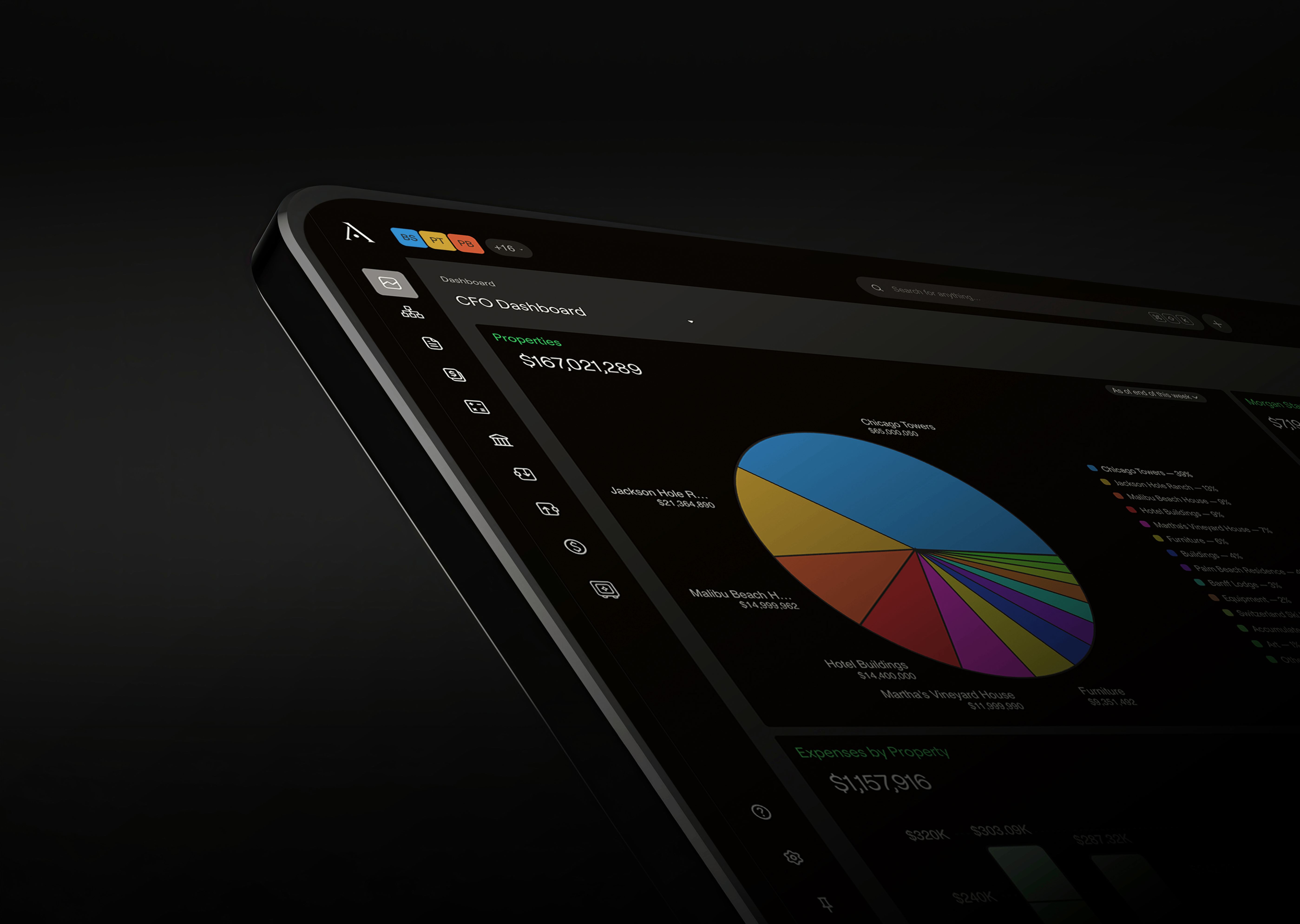
Unified accounting, investment tracking, entity management, and reporting—purpose-built for family offices.
Most family offices outgrow their accounting software long before they replace it. This guide compares the general ledger platforms they move to, and explains where each one fits.
The pattern repeats across the offices we meet. The books start in QuickBooks or Excel because that is what the first accountant knew. Then the entities multiply. A trust here, a holding company there, a few partnerships and an LLC for the plane. Each one gets its own file, and the combined picture gets rebuilt by hand at the end of every month.
At some point the rebuilding takes more time than the bookkeeping. That is when the office starts looking for a general ledger built for the way it actually operates.
This guide covers seven platforms that come up in those searches. Asseta is ours, and it goes first. For every platform, including ours, we describe what it is, who it fits, and where its limits are.
The seven platforms at a glance
| Platform | Best for | Approach |
|---|---|---|
| Asseta | Family offices that want accounting, reporting, and partnership accounting in one suite | Purpose-built for family offices |
| Sage Intacct | Offices with corporate structures and in-house Intacct skills | Generalist mid-market general ledger |
| Asset Vantage | Offices that want portfolio reporting and a ledger from one vendor | Reporting first, with a general ledger added |
| Archway | Offices that want software and outsourced operations together | Platform plus managed services |
| NetSuite | Offices built around an operating company already on NetSuite | Generalist cloud ERP |
| QuickBooks Online | New offices with one or two entities | Small-business accounting |
| FundCount | Offices whose complexity sits in funds and investment accounting | Portfolio and partnership accounting with a ledger |
Why family office accounting is different
Generic accounting software is built around one assumption: one company, one set of books, one corporate income statement. A family office breaks that assumption on day one. It runs many legal entities as a single operation, and those entities lend to each other, share expenses, and own pieces of one another.
The vocabulary is different too. Trusts, partnerships, capital accounts, inter-entity loans, and ownership that changes over time are everyday concepts in a family office. Most generic systems have no native place for them.
The reporting is the clearest gap. The family wants a net worth statement and a clear view of where cash came from and where it went. Generic software produces a corporate cash flow statement instead. That is why so many offices still build the family reports in Excel after they buy software.
How we evaluated
We looked at each platform through three questions. They are the same three we suggest to any office choosing software, whether or not Asseta is on the shortlist.
- Does it handle multi-entity work natively? Consolidation, eliminations, and inter-entity entries should be features, not workarounds.
- Will the team adopt it? A system that takes a year to set up fails before it pays off. Implementation time and training matter as much as features.
- Does the vendor understand family offices? This work has its own patterns. A generalist learns them on your budget.
1. Asseta
Asseta is The Intelligent Family Office Suite®. It was built from the start for family offices, so the structure of a family office is the structure of the software. Entities, trusts, partnerships, and the ownership between them are first-class objects, not custom fields.
The general ledger is multi-entity by design. Every entity lives in one place, inter-entity transactions post both sides together, and consolidated reporting is a standard output rather than a monthly project. Net worth and family-style cash reporting come from the same books as the entity-level financials.
Partnership accounting is part of the suite. Ownership updates, historical cap tables, and limited partner capital accounts are tracked in the same system as the ledger, so allocations and capital account statements do not live in a separate spreadsheet.
Asseta also connects to the tools an office already runs. [CONFIRM: list the integrations to name here, for example Addepar, bill pay, and bank feeds.] Teams can work from the mobile app, and the MCP connector lets them query their own books in plain language. [CONFIRM: wording on the MCP connector.]
Where we are honest about limits: Asseta is built for family offices, so an office whose center of gravity is a large operating business with its own ERP may want that ERP to stay the system of record for the business. [CONFIRM: any other limits to state, for example multi-currency status.]
Best for: single and multi family offices that want accounting, reporting, and partnership accounting in one suite, built by people who only work on family offices.
2. Sage Intacct
Sage Intacct is a mature mid-market cloud general ledger. It supports multiple entities, dimensional reporting, and consolidation, and Sage markets it to family offices directly. It also has a large partner network, which makes it easy to find consultants who know the product.
Its model is corporate. Trusts, personal expenses, net worth reporting, and family-style cash views are possible, but they take configuration, and that configuration is usually done by a consultant. Offices should model the total cost over several years, including partner fees and renewals, not only the first-year license.
Best for: offices with corporate-heavy structures, existing Intacct expertise in house, or operating businesses already on the product.
3. Asset Vantage
Asset Vantage began as a portfolio and performance reporting platform and later added a native general ledger. The result is one system where investment reporting and accounting share the same underlying books.
That integration is the main draw. It is also the main trade-off. The interface is built for accountants and investment professionals, and family members without a finance background often find it harder to use than reporting-first tools. Offices should decide who will actually log in before choosing it.
Best for: offices that want performance reporting and the ledger from one vendor, with an accounting team driving the platform.
4. Archway
The Archway Platform bundles accounting, investment data aggregation, partnership accounting, bill payment, reporting, and a client portal. Offices can also add outsourced back-office services from the same vendor.
It is a heavyweight option with a long record among large offices. The weight is the trade-off. Implementation, adoption, and total cost are all substantial, and an office that wants a lean, self-managed stack should scope them carefully against what it really needs.
Best for: offices that want one vendor for software and operations, and have the scale to justify it.
5. NetSuite
NetSuite is Oracle's cloud ERP. It consolidates across many entities and currencies and runs some of the most complex corporate structures in the world. Family offices anchored by a large operating business sometimes standardize on it because the business already lives there.
The fit question is the same as Sage Intacct's, at a larger scale. The model is corporate. Trusts, personal expenses, and net worth reporting take real customization, implementations run for months, and the office ends up adapting its processes to the ERP. That cost falls hardest on small teams.
Best for: offices whose main activity is an operating company that already runs NetSuite.
6. QuickBooks Online
QuickBooks is where most family offices start. It is inexpensive, every accountant knows it, and for one or two entities it works.
The limits are structural. Each entity needs its own company file, and there is no consolidation across files. A growing office ends up with a login per taxpayer ID and a combined view rebuilt in Excel every month. Trusts, partnerships, net worth statements, and automated inter-entity entries sit outside what the product was built to do. Past a handful of entities, the workarounds cost more than purpose-built software.
Best for: brand-new offices with one or two entities and a simple structure.
7. FundCount
FundCount comes from the hedge fund world. It combines portfolio accounting, partnership accounting, and a general ledger in one system, with multi-currency support and a choice of deployment options.
Its depth is in investment and partnership accounting. The household side of a family office, including personal expenses, bill pay workflows, and the reports a principal will actually read, deserves a close look before committing.
Best for: offices whose complexity concentrates in funds, partnerships, and multi-asset investment accounting.
How to choose
Start from your structure, not from a feature list. Count the entities. Count the loans, fees, and shared expenses that move between them. An office with five entities and public securities has different needs from one with thirty entities, layered ownership, and active partnerships.
Then run the three questions against your shortlist. Ask every vendor to demo your actual structure, not a sample company. Call references from offices that look like yours.
One more thing we see often: buyers over-weight the feature checklist. What matters more is how well a platform handles your three biggest pain points today, and whether the company behind it is building in the direction you need.
If your books are the problem and your structure is multi-entity, bring two entities that owe each other money to a demo.
We will show you what the inter-entity entries and the consolidation look like when the system does the work.
Lead with Legacy.